
Taylor Swift: A Phenomenon Beyond Music
You can’t help but notice her. On magazine covers, in the news, in conversations, in economic analyses, and even in comments from people who normally have no connection to pop culture. Taylor Swift is everywhere. Today, she is far more than a pop singer: she is a cultural and social phenomenon shaping narratives, trends, and conversations about power, identity, and ownership.
In one decade, she has broken nearly every existing music record: Eras Tour became the most profitable tour in history, her albums break streaming records within hours, and her latest album Showgirl made history as the only one to win the Grammy for Album of the Year four times. Her influence today is discussed not only by music critics but also by economists, cultural theorists, and legal experts.
Music That Becomes a Cultural Subject
Her presence transcends the music industry—it is increasingly analyzed at the level of literature and symbolism. For instance, I recently listened to a literature professor who analyzed her song The Fate of Ophelia through the lens of Shakespeare’s Ophelia: not just as a musical work, but as a contemporary reinterpretation of one of the most famous female tragic archetypes. That’s the moment when you see her true reach, when a pop song becomes the subject of literary analysis on the level of canonical characters. (If you haven’t listened to The Fate of Ophelia yet, I recommend it).
However, the most important part of her story is not found in the numbers, but in what she represents. Taylor Swift is one of the rare artists who has managed to transform a personal struggle into a universal reminder: authorship over one’s own life is not something that is given—it is something that is won.
How “Taylor’s Version” Came to Be
When she was very young, she signed a contract that gave ownership of her first albums to the record label. Later, when she wanted to buy them back, she was not allowed to. In other words: her own works, her beginnings, her feelings, her words did not belong to her.
Instead of accepting it, she re-recorded all her old albums under a new name—Taylor’s Version. Not as a copy, but as a reclamation of identity and authorship.
Harvard Law School described this move as a moment that “pushed the boundaries of thinking about ownership in the digital era,” and the British Guardian called it “the quietest, yet most powerful rebellion in contemporary music.”
She didn’t change history—she reclaimed the right to it.
A Story That Becomes a Metaphor
When we look at it from this perspective, Taylor’s story is not just about music, it is a metaphor. Because most of us at some point in life signed a “contract” we never consciously chose. Not with a record label, but with the expectations of our environment.
In childhood or youth, when we had no choice or understanding, we signed silent agreements: “be good and obedient,” “don’t ask for too much,” “don’t be a bother,” “you can’t have it all,” “don’t ask for help,” “don’t contradict,” “don’t be too sensitive,” “don’t stand out.” Later we live within those boundaries as if they are part of us, even though they were never our version.
That is the invisible moment when we lose ownership of ourselves. We don’t notice it when it happens, but we feel it as a quiet separation from ourselves. And that’s exactly where the inner work begins: not in erasing the past, but in reclaiming authorship.
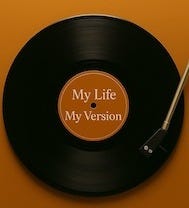
Reclaim Your Version with RTT
In RTT (Rapid Transformational Therapy), we recognize exactly that: we don’t erase the past, but we break old, unconsciously adopted contracts and develop a new version of ourselves, one that we sign ourselves, consciously and as adults.
Not “Taylor’s Version,” but “My Life My Version.”
My history, my interpretation.
My beginnings, my authorship.
My experience, my signature.
If you feel that parts of your life still carry someone else’s signature, that somewhere along the way you lost the right to your own version of yourself, I want to give you space to begin.
I invite you to a free introductory session (30 min) where we can explore together:
• which “old contract” is still running your life
• what is truly “your version” waiting to be signed
• where you are between the old identity and who you want to become
Because if one artist can reclaim ownership of her voice, then you can reclaim ownership of your life.
My Life My Version.
And the signature finally goes in the right place.