
The brain produces electrical impulses that are classified into different types of waves, depending on their frequency. Each type of brain wave corresponds to different mental and emotional states.
As you read this, you are most likely in your daily waking state of beta brain waves. Your brain is processing sensory information and trying to create meaning between your external and internal worlds. While you are engrossed in reading this article, you may feel the weight of your body on the chair, you may hear music in the background, you may occasionally glance towards the window. All this information is processed in your rational brain, the cerebral cortex. The cerebral cortex, or neocortex, is the part of the brain that is responsible for functions such as thinking, perception and decision-making. In a way, this state keeps you connected to the material world.
However, it is interesting how, in moments of deep concentration or creativity, the brain can shift into other states, such as alpha or theta waves , where relaxation and creativity flourish. These states help the brain process information in a different way, allowing insight and a deeper connection to inner thoughts or ideas.
What is the flow of your thoughts now? More analytical or do you occasionally relax and get into creative thinking?
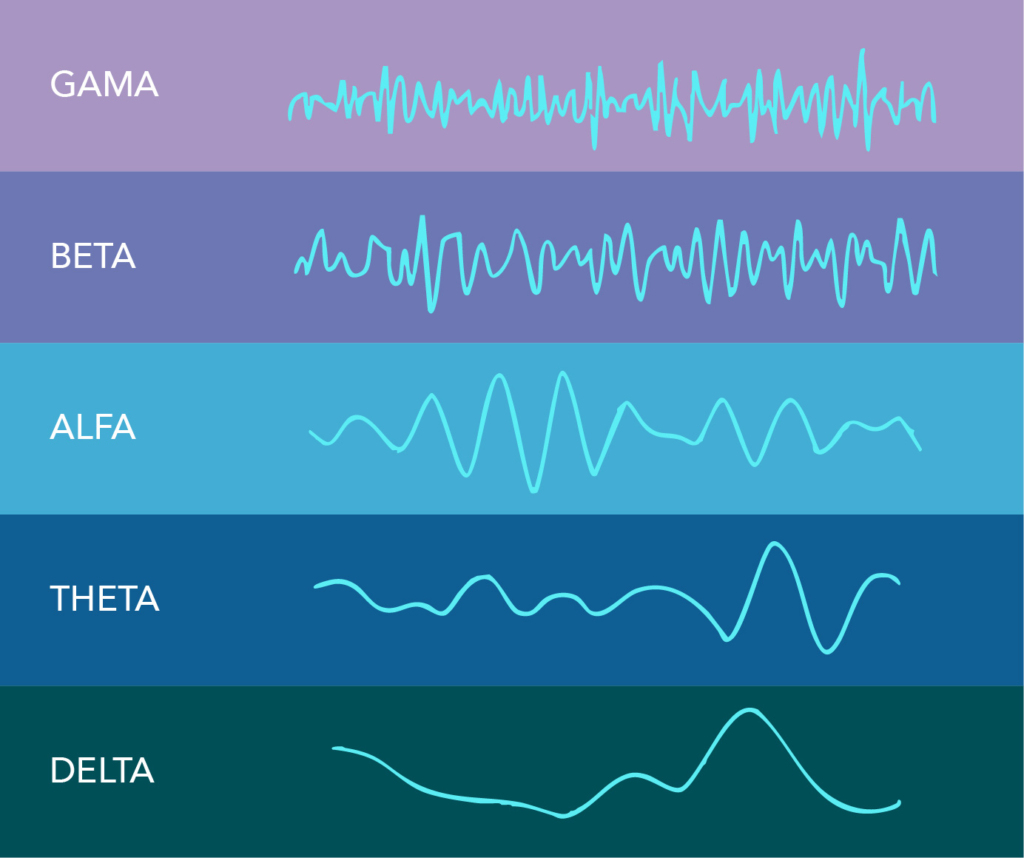
Let’s say you now close your eyes (80% of sensory information comes through vision) and intentionally focus inward. Because you significantly reduce the amount of sensory input from your environment, less information enters your nervous system and your brain waves naturally slow down into an alpha state. You are relaxing. You become less preoccupied with things and events in the external world, and the internal world begins to capture your attention. Now you think and analyze less and the brain is in a state of shallow meditation.
Immerse yourself in Theta brain waves and surrender to hypnosis
Theta waves
In adults, theta waves occur in a state between sleep and wakefulness (like the twilight of consciousness) or in a lucid state, during which some people find themselves half-awake and half-asleep (the conscious mind is awake, while the body is somewhat asleep). This is a state in which hypnotherapists can access the subconscious mind. In the theta state we are more susceptible to suggestion and reprogramming because there is no veil between the conscious and unconscious mind. Theta waves can be induced through hypnosis , allowing a person to access their subconscious beliefs and experiences and work on changing negative patterns of thinking and behavior. This is exactly why hypnosis is such an effective method for changing deeply held beliefs and emotional blockages that can be achieved in a short amount of time.
For the first 6 years of our lives, our brain function is in theta brainwaves, when we are just noticing and observing, adopting beliefs from the people around us.
This means that in the first years of life, our brain is in a state that enables easy absorption of information, without much critical thinking. We can imagine it as a “sponge” that absorbs everything that happens around us. During this period, our thoughts and beliefs are shaped based on what we see and hear from other people, such as parents, family, friends, and the environment. It is the stage when we form the foundations for our belief, behavior and way of thinking that will follow us through life. Imagine what that means, and what beliefs we can pick up during that period of life, which will follow us and define us as people, influencing our life choices and decisions!
That’s why, when solving emotional or physical problems, it’s important to access the subconscious.
Delta waves
For most of us, delta waves represent deep sleep. In this state, there is very little conscious attention, and the body is renewing itself.