
It is quite clear why I am writing about Robert Redford (August 18, 1936 – September 16, 2025) now, but what does RTT® (Rapid Transformational Therapy) have to do with it?
My friends with whom I spoke all told me the same thing: “I really loved him.” And I added: “We all loved him.” An excellent actor, handsome, charismatic, with many great roles and characters. My favorite films of his are Butch Cassidy and the Sundance Kid and The Great Gatsby. I cannot decide which of the two.
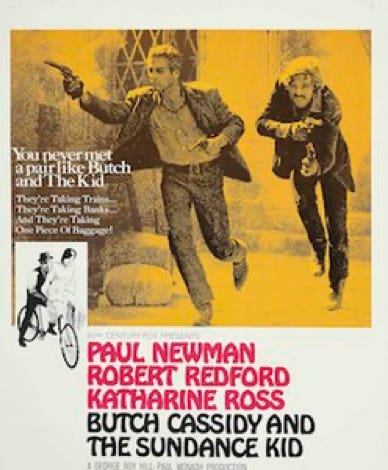
Butch Cassidy and the Sundance Kid
This is a buddy film in its purest form. It is not just about action or shootouts, but about the relationship between Cassidy and Sundance – how they function together, how they make decisions, and how they take risks for each other. Throughout the film, we constantly see how they have each other’s backs and remain consistent in their dynamic. The film’s ending is not happy, but the value of their story lies in that loyalty and mutual trust.
The final shot is particularly striking. Butch and Kid rush through a courtyard, surrounded by a hail of bullets, and the camera “freezes” them in motion, as if the moment is suspended before the final outcome. The film ends there, without showing their deaths, but clearly demonstrates their dedication and connection in their last moments.
We all have an inner buddy, a voice that encourages and supports us when we fall. RTT® helps awaken that voice to work for us. The buddy film within us means recognizing that ally and allowing it to drive us, just as Cassidy and Sundance have each other’s backs.
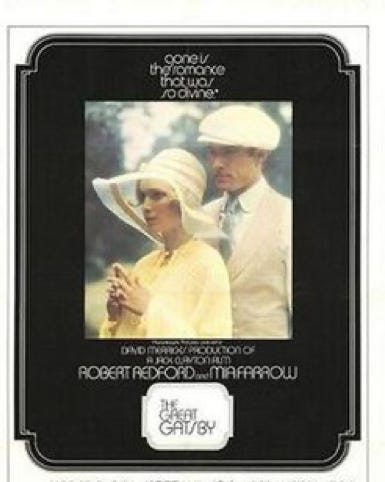
The Great Gatsby
Jay Gatsby was a man of humble origins who dedicated his entire life to one thing – to become someone worthy of the love of the woman he adored, Daisy Buchanan.
Daisy was the embodiment of everything Gatsby desired: beauty, status, belonging to a higher class. When he first met her, he was a poor young man with no prospects. But after years and war separated them, Gatsby decided to become rich, powerful, and influential – all to win her back. His extravagant mansion, lavish parties, and wealth were not for him – it was all for her.
But when they finally meet, Gatsby discovers a painful truth: what he had built was a dream. An ideal. An image he created in his mind, not a real person. Daisy could not (or would not) love him the way he imagined.
Despite everything, Gatsby never believed he was enough as he was. His worth was conditioned by whether someone else would choose him.
And that is why The Great Gatsby remains such a powerful story today, because it shows how much we can lose when we believe we must become someone else to be worthy of love.
And to return to the initial question: what does RTT® have to do with it? Well, perhaps nothing, or perhaps a lot, but that is for you to judge. In any case, we are grateful to Robert Redford for all the brilliant, timeless roles that have marked generations and become part of film history.